

Can a fin press be used in hazardous environments? That's a question I often get asked as a fin press supplier. Let's dig into this topic and see what we can find out.

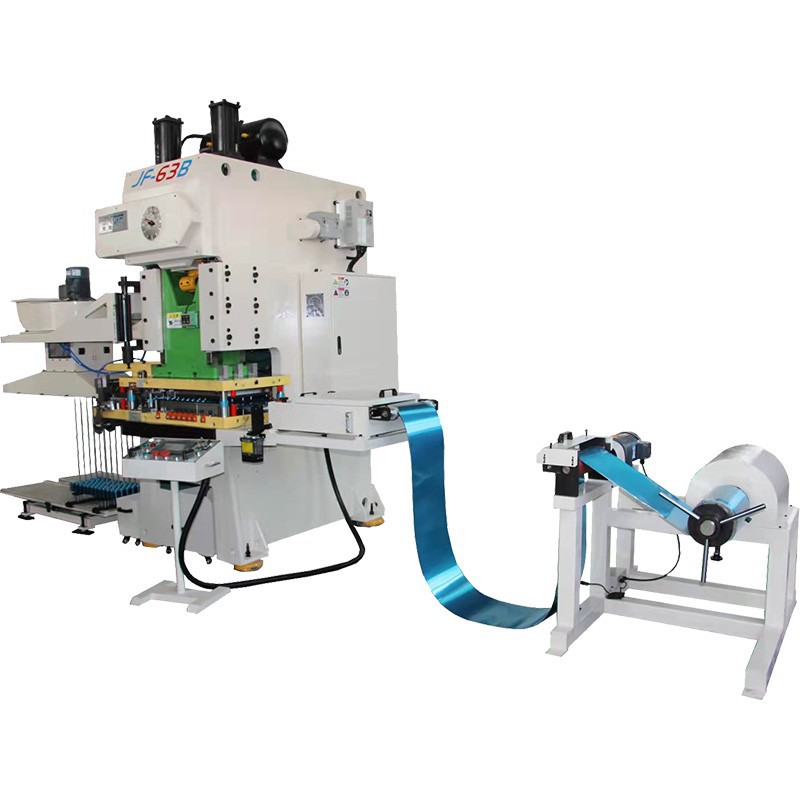
First off, let's talk about what a fin press is. A fin press is a key piece of equipment used in the manufacturing of heat exchangers, which are crucial components in air - conditioning units, refrigerators, and other cooling systems. As a supplier, I offer different types of fin presses like the Stamping Machine Line for Air Condition, Open Type Fin Press Line, and H Type Fin Press Line.
Now, when it comes to hazardous environments, we're talking about places where there are potentially dangerous substances or conditions. This could include areas with high levels of dust, chemicals, or explosive gases. These conditions can pose serious risks to both the equipment and the operators.
When considering using a fin press in such hazardous settings, one of the biggest concerns is the risk of corrosion. In environments with chemicals or high humidity, metal parts of the fin press can start to rust and deteriorate. This reduces the lifespan of the machine and can also affect its performance. For example, if the stamping mechanism of the fin press is corroded, it may not be able to create precise fins, leading to lower - quality heat exchangers.
Another issue is the presence of dust and debris. In some industrial settings, there can be a lot of fine dust particles floating in the air. These particles can get inside the fin press and clog up the moving parts. This can cause the machine to overheat, break down, or even create safety hazards. For instance, if the dust accumulates on the electrical components of the fin press, it could lead to short - circuits, which are not only dangerous but also costly to repair.
Explosive gases are perhaps the most serious hazard. Most fin presses rely on electrical motors to operate. If there are flammable gases in the environment, a spark from the electrical system of the fin press could potentially cause an explosion. This is a life - threatening situation, and it's definitely something that needs to be taken into account.
However, that doesn't mean that a fin press can never be used in hazardous environments. There are ways to make it safer.
One solution is to use explosion - proof components. For the electrical parts of the fin press, you can choose components that are designed to prevent sparks from igniting the surrounding gases. These explosion - proof parts are built with special enclosures that can contain any internal sparks and prevent them from reaching the explosive atmosphere outside.
Sealing is also important. By ensuring that the fin press is well - sealed, you can prevent dust and chemicals from getting inside the machine. This can be achieved through gaskets and seals around all the openings of the fin press. Regular maintenance of these seals is crucial to make sure they are working effectively.
Corrosion - resistant materials can be used in the construction of the fin press. Instead of regular steel, which is prone to rust, you can use stainless steel or coated metals. These materials can withstand the harsh chemical conditions in a hazardous environment and last much longer.
Proper ventilation is a must. In environments with high levels of dust or chemicals, having good ventilation helps to remove these harmful substances from the air around the fin press. This not only protects the machine but also the operators. It can be as simple as installing exhaust fans or using a more complex ventilation system.
Training the operators is just as important as the equipment modifications. Operators need to be aware of the risks associated with operating a fin press in a hazardous environment. They should know how to handle the equipment safely, perform regular inspections, and what to do in case of an emergency.
In some cases, it may be more practical to install the fin press in a separate, well - protected area. This can create a buffer zone between the hazardous environment and the machine, reducing the direct exposure to the dangerous substances.
In conclusion, while using a fin press in a hazardous environment is challenging, it's not impossible. With the right precautions, such as using explosion - proof components, proper sealing, corrosion - resistant materials, ventilation, and operator training, it can be done safely.
If you're in the market for a fin press and are dealing with a hazardous environment, don't hesitate to reach out. I can work with you to find the best solution for your specific needs. We can discuss how to adapt the fin press to your environment and make sure it operates safely and efficiently. Whether you're interested in the Stamping Machine Line for Air Condition, Open Type Fin Press Line, or H Type Fin Press Line, I'm here to help. Let's have a chat and see how we can make your production process smooth and safe.
References
- General guidelines on industrial equipment safety in hazardous environments
- Manufacturer's specifications for fin press equipment


