

What is the Accuracy of a Punching Machine?
As a seasoned supplier of punching machines, I've witnessed firsthand the critical role accuracy plays in the manufacturing industry. Punching machines are used across various sectors, from automotive and aerospace to electronics and home appliances. The accuracy of these machines can significantly impact product quality, production efficiency, and overall cost - effectiveness.
Understanding Punching Machine Accuracy
The accuracy of a punching machine refers to its ability to perform punching operations with precision. This encompasses several key aspects:
Positional Accuracy
Positional accuracy is about how precisely the punching tool can be positioned on the workpiece. It is measured in terms of the deviation from the intended punching location. For example, in the production of electronic circuit boards, even a slight mis - punch can render the entire board useless. High - positional accuracy ensures that holes are punched exactly where they are supposed to be, which is crucial for the proper assembly of components.
Dimensional Accuracy
Dimensional accuracy pertains to the size of the punched holes or shapes. The machine must be able to create holes or cutouts with the exact diameter, length, or width as specified in the design. In the automotive industry, where parts need to fit together perfectly, dimensional accuracy is non - negotiable. Any deviation can lead to problems during the assembly process, such as loose fittings or parts that do not align correctly.
Repeatability
Repeatability is the machine's ability to consistently produce the same results over multiple punching operations. A punching machine with high repeatability will punch holes with the same positional and dimensional accuracy every time. This is essential for mass production, where thousands or even millions of identical parts need to be manufactured. For instance, in the production of air - conditioner fins, repeatability ensures that each fin has the same shape and hole pattern, which is necessary for proper airflow and heat transfer.
Factors Affecting Punching Machine Accuracy
Machine Design and Construction
The design and construction of the punching machine are fundamental to its accuracy. A well - built machine with a rigid frame can minimize vibrations during the punching process, which in turn improves accuracy. High - quality components, such as precision ball screws and linear guides, also contribute to better positional accuracy. For example, machines with a heavy - duty frame are less likely to experience flexing, which can cause misalignment of the punching tool.
Tooling
The quality of the punching tools is another critical factor. Sharp and well - maintained tools can punch clean holes with better dimensional accuracy. Dull or worn - out tools can cause burrs, irregular hole shapes, and positional errors. Additionally, the proper selection of tooling for the specific material and application is essential. For instance, using a tool designed for thin sheet metal on a thick plate will result in poor accuracy.
Control System
The control system of the punching machine is responsible for guiding the punching tool to the correct position. A sophisticated control system with high - resolution encoders can provide more precise positioning. Advanced control algorithms can also compensate for factors such as tool wear and material thickness variations, further improving accuracy. For example, some modern punching machines use servo - motor - driven control systems that can adjust the punching force and speed in real - time based on the material properties.
Material Properties
The properties of the material being punched, such as its hardness, thickness, and grain direction, can affect punching accuracy. Harder materials may require more force to punch, which can cause the machine to vibrate more and reduce accuracy. Thicker materials may also pose challenges in terms of dimensional accuracy, as the punching process can cause more deformation. The grain direction of the material can also influence the shape of the punched hole, especially in materials like wood or some metals.
Measuring and Ensuring Punching Machine Accuracy
Calibration
Regular calibration is essential to maintain the accuracy of a punching machine. Calibration involves checking and adjusting the machine's components to ensure that it is operating within the specified accuracy limits. This may include checking the positional accuracy of the punching tool, the dimensional accuracy of the holes, and the repeatability of the machine. Calibration should be performed by trained technicians using precision measuring instruments, such as coordinate measuring machines (CMMs).
Quality Control Checks
Implementing a comprehensive quality control system is crucial for ensuring punching machine accuracy. This can include in - process inspections, where samples are taken at regular intervals during production to check for positional and dimensional accuracy. Final inspections can also be conducted on finished products to ensure that they meet the required specifications. For example, using optical inspection systems can quickly and accurately detect any punching errors.
Applications and the Importance of Accuracy
Automotive Industry
In the automotive industry, punching machines are used to manufacture a wide range of components, such as engine parts, body panels, and suspension components. High accuracy is essential to ensure the safety and performance of the vehicles. For example, the holes in engine blocks need to be punched with extreme precision to ensure proper alignment of the pistons and other moving parts.
Electronics Industry
The electronics industry relies heavily on punching machines for the production of printed circuit boards (PCBs). The tiny holes in PCBs need to be punched with micron - level accuracy to accommodate the small components. Even a minor error can lead to short circuits or other electrical problems.
Air - Conditioning Industry
In the air - conditioning industry, punching machines are used to produce fins for heat exchangers. The accuracy of these machines is crucial for the efficiency of the air - conditioning units. Well - punched fins with consistent hole patterns and shapes ensure proper airflow and heat transfer. For more information on punching machines for air - conditioner production, you can visit our Stamping Machine Line for Air Condition.
Our Punching Machine Offerings
We offer a wide range of punching machines designed to meet the diverse needs of different industries. Our Open Type Fin Press Line is ideal for the production of air - conditioner fins, with high accuracy and repeatability. It is equipped with advanced control systems and high - quality tooling to ensure precise punching operations.
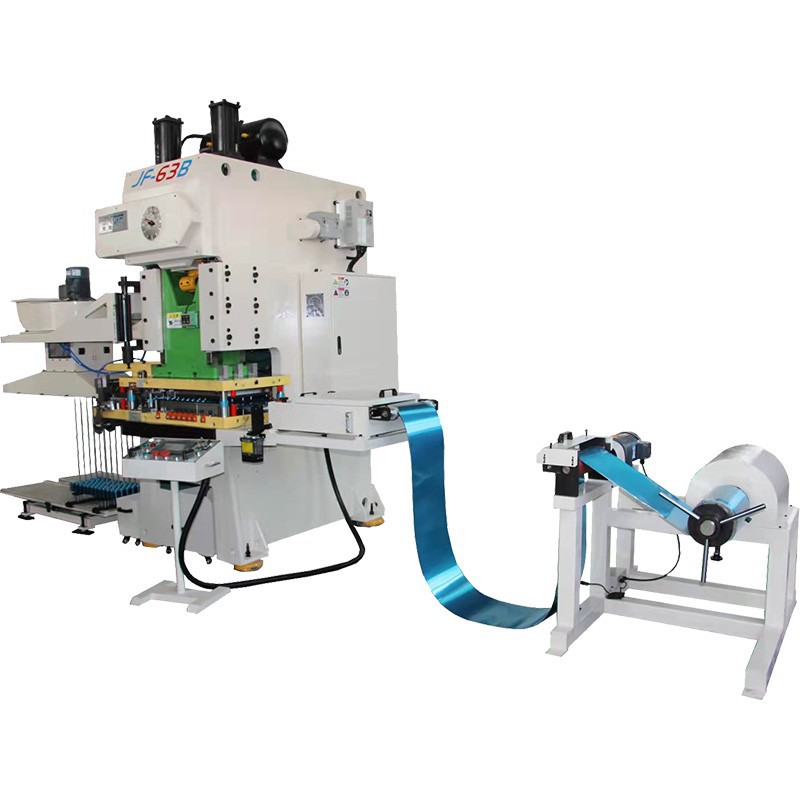

Our H Type Fin Press Line is another excellent option for industries that require high - precision punching. It features a robust design and advanced technology to deliver superior accuracy and performance.
Conclusion
The accuracy of a punching machine is a multi - faceted concept that encompasses positional accuracy, dimensional accuracy, and repeatability. It is affected by various factors, including machine design, tooling, control systems, and material properties. Ensuring high accuracy is crucial for the quality and efficiency of manufacturing processes across different industries.
If you are in the market for a punching machine and are looking for high - accuracy solutions, we invite you to contact us for a detailed discussion. Our team of experts can help you select the right machine for your specific needs and provide you with the support you need to ensure optimal performance.
References
- "Manufacturing Engineering and Technology" by Serope Kalpakjian and Steven Schmid
- "Modern Machining Technology" by David A. Stephenson and John A. Agapiou


