

In the manufacturing and industrial sectors, fin presses play a crucial role in various applications. As a fin press supplier, I've witnessed firsthand the diverse range of industries and products that benefit from the use of these machines. In this blog post, I'll explore the application scope of fin presses and discuss how they contribute to different manufacturing processes.

HVAC Industry
One of the most significant application areas for fin presses is the heating, ventilation, and air conditioning (HVAC) industry. In HVAC systems, fins are essential components of heat exchangers, which are used to transfer heat between two fluids, such as air and water or refrigerant. Fin presses are used to produce these fins with high precision and efficiency.
The fins in HVAC heat exchangers are typically made of aluminum or copper sheets. Fin presses can shape these sheets into various fin patterns, such as straight fins, wavy fins, or louvered fins. These different fin patterns are designed to increase the surface area of the heat exchanger, thereby enhancing the heat transfer efficiency. For example, louvered fins have small slits or louvers that disrupt the airflow, creating turbulence and improving the heat exchange between the air and the refrigerant.
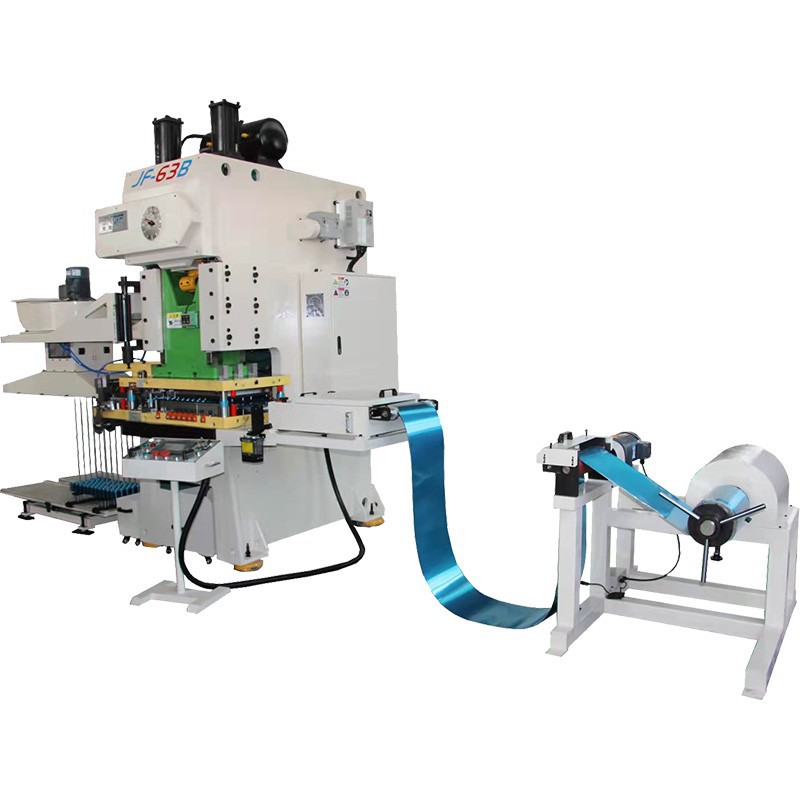
The Stamping Machine Line for Air Condition is specifically designed for the production of fins used in air conditioning systems. This type of fin press can produce fins with high accuracy and consistency, ensuring the optimal performance of the air conditioning units. The stamping process is fast and efficient, allowing for high-volume production to meet the demands of the HVAC market.
Refrigeration Industry
Similar to the HVAC industry, the refrigeration industry also relies heavily on fin presses for the production of heat exchangers. Refrigeration systems, including commercial refrigerators, freezers, and cold storage units, require efficient heat transfer to maintain the desired temperature. Fin presses are used to manufacture the fins for the evaporators and condensers in these refrigeration systems.
The choice of fin material and fin pattern in the refrigeration industry is crucial for achieving the best performance. Aluminum fins are commonly used due to their lightweight and good heat conductivity. Different fin geometries are selected based on the specific requirements of the refrigeration system, such as the cooling capacity and the operating environment.
The use of advanced fin presses enables the production of fins with tight tolerances and complex shapes. This ensures that the heat exchangers in refrigeration systems can operate at maximum efficiency, reducing energy consumption and improving the overall performance of the refrigeration equipment.
Automotive Industry
In the automotive industry, fin presses are used for the production of various heat exchangers, such as radiators, oil coolers, and charge air coolers. These heat exchangers are essential for maintaining the proper operating temperature of the engine, transmission, and other critical components.
Radiators, for example, are used to cool the engine coolant. The fins in radiators increase the surface area available for heat transfer, allowing the coolant to dissipate heat more effectively. Fin presses can produce the intricate fin structures required for automotive radiators, ensuring efficient cooling performance.
The automotive industry requires high-quality and reliable fin presses to meet its production needs. The presses must be able to produce fins with a high degree of accuracy and repeatability, as even small variations in fin dimensions can affect the performance of the heat exchanger. Additionally, the fin presses need to be capable of handling high volumes of production to keep up with the demand from the automotive manufacturers.
Electronics Industry
The electronics industry has also started to utilize fin presses for the production of heat sinks. Heat sinks are used to dissipate heat generated by electronic components, such as microprocessors, power transistors, and LED lights. As electronic devices become more powerful and compact, the need for efficient heat dissipation becomes increasingly important.
Fin presses can produce heat sink fins with various shapes and sizes to meet the specific requirements of different electronic components. The fins are typically made of aluminum or copper due to their excellent thermal conductivity. By using fin presses, manufacturers can produce heat sinks with high-density fin arrays, which significantly increase the surface area available for heat transfer.
This allows electronic components to operate at lower temperatures, improving their reliability and lifespan. The H Type Fin Press Line is well-suited for the production of heat sink fins, providing high precision and productivity in the electronics manufacturing process.
Other Industries
Apart from the above major industries, fin presses also find applications in other fields. For example, in the aerospace industry, fin presses can be used for the production of heat exchangers in aircraft engines and environmental control systems. The high-performance requirements of the aerospace industry demand fin presses that can produce fins with extremely high precision and quality.
In the industrial process cooling applications, fin presses are used to manufacture heat exchangers for various industrial processes, such as chemical processing, power generation, and metalworking. These heat exchangers are used to cool process fluids or remove heat from equipment, ensuring the smooth operation of industrial processes.
Different Types of Fin Presses
There are different types of fin presses available in the market, each designed to meet specific manufacturing requirements. The Open Type Fin Press Line is known for its flexibility and accessibility. It allows for easy setup and adjustment of the fin production process, making it suitable for small to medium-scale production or for producing a variety of fin designs.
On the other hand, the H Type Fin Press Line offers high productivity and precision. It is often used in large-scale manufacturing operations where high-volume production of fins with consistent quality is required. The stamping machine line for air condition is specifically optimized for the production of fins used in air conditioning systems, providing specialized features and capabilities to meet the unique needs of this industry.
Conclusion
The application scope of fin presses is vast and diverse, spanning across multiple industries. From HVAC and refrigeration to automotive, electronics, and aerospace, fin presses play an essential role in the production of heat exchangers and heat sinks. As technology continues to advance, the demand for more efficient and high-performance fin presses is likely to increase.
If you are involved in any of these industries and are looking for reliable fin press solutions, please feel free to reach out. We are a professional fin press supplier with extensive experience and expertise in providing high-quality fin presses. Our team can work with you to understand your specific requirements and offer the most suitable solutions for your manufacturing needs. Contact us today to discuss your fin press procurement and start a mutually beneficial business relationship.
References
- Smith, J. (2020). Heat Exchanger Design and Applications. Publisher Name.
- Johnson, A. (2019). Advances in Fin Manufacturing Technology. Journal of Manufacturing Science, 15(2), 45 - 60.
- Brown, C. (2021). Automotive Heat Exchanger Technology. Automotive Engineering Journal, 22(3), 78 - 92.


