

Can a stamping machine be used for non - standard parts production?
As a stamping machine supplier, I often encounter inquiries from customers regarding the versatility of stamping machines, especially their applicability in the production of non - standard parts. In this blog post, I will delve into this topic, exploring the feasibility, advantages, and challenges of using stamping machines for non - standard parts production.
Feasibility of Using Stamping Machines for Non - Standard Parts
Stamping machines are highly adaptable tools that can be employed in the production of both standard and non - standard parts. The fundamental principle of stamping involves applying force to a workpiece through a die to deform or cut it into the desired shape. This process can be customized to create a wide range of parts with different geometries, sizes, and materials.
For non - standard parts, the key lies in the design and manufacturing of the stamping die. With advanced CAD/CAM technology, it is possible to design dies that precisely match the specifications of non - standard parts. Once the die is fabricated, the stamping machine can then reproduce the part with high precision and consistency.
For example, in the automotive industry, many custom - made components such as brackets, clips, and decorative parts are produced using stamping machines. These parts often have unique shapes and dimensions that are tailored to the specific requirements of the vehicle model. Similarly, in the electronics industry, stamping machines are used to manufacture non - standard parts like connectors, shielding cases, and heat sinks.
Advantages of Using Stamping Machines for Non - Standard Parts Production
High Efficiency
Stamping machines are capable of producing parts at a high rate. Once the stamping die is set up, the machine can perform multiple stamping operations in a short period. This makes it suitable for large - scale production of non - standard parts, reducing the overall production time and cost.
Precision and Consistency
The use of stamping dies ensures that each part produced has the same dimensions and quality. This is crucial for non - standard parts, as they often need to fit precisely into a larger assembly. The high precision of stamping machines also reduces the need for post - processing, further improving the efficiency of the production process.
Material Savings
Stamping is a relatively material - efficient process. By carefully designing the layout of the stamping die, it is possible to minimize the amount of scrap material generated during production. This not only reduces the material cost but also has a positive impact on the environment.

Flexibility
Stamping machines can work with a variety of materials, including metals (such as steel, aluminum, and copper) and non - metals (such as plastics and composites). This flexibility allows manufacturers to choose the most suitable material for their non - standard parts based on factors such as strength, weight, and cost.
Challenges in Using Stamping Machines for Non - Standard Parts Production
Die Design and Manufacturing
The design and manufacturing of stamping dies for non - standard parts can be complex and expensive. It requires a high level of expertise in die design and machining. Additionally, the lead time for die production can be relatively long, which may delay the start of production.
Material Selection and Formability
Not all materials are suitable for stamping. Some materials may have poor formability, which can lead to cracking, wrinkling, or other defects during the stamping process. Therefore, careful consideration must be given to material selection to ensure successful production of non - standard parts.
Quality Control
Since non - standard parts often have unique specifications, it can be challenging to establish a standardized quality control system. Special inspection tools and techniques may be required to ensure that the parts meet the required quality standards.
Our Stamping Machine Solutions for Non - Standard Parts Production
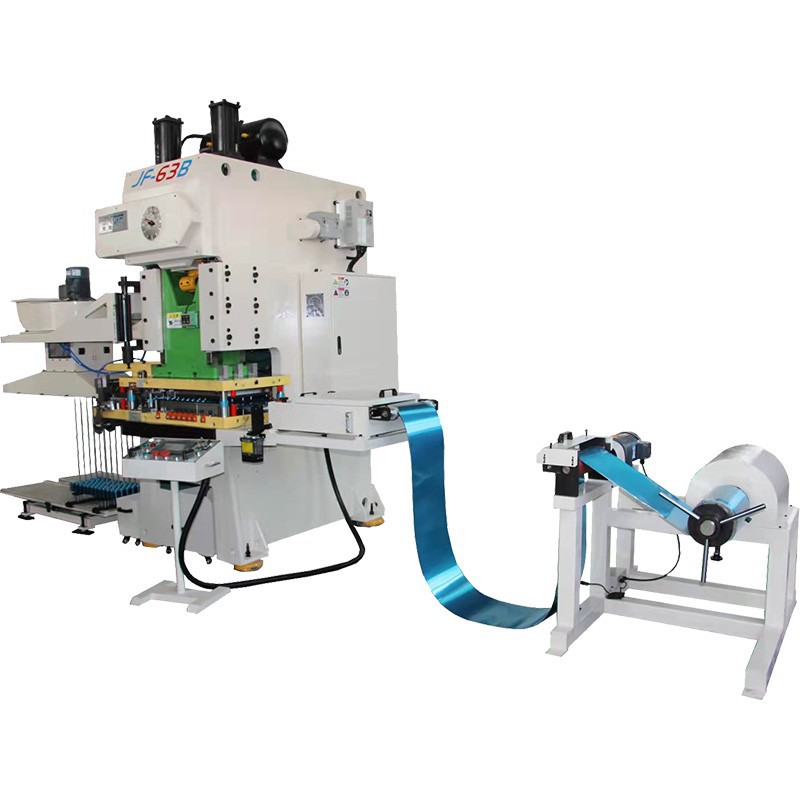
At our company, we offer a wide range of stamping machines that are suitable for non - standard parts production. Our Open Type Fin Press Line is designed with high flexibility, allowing for easy customization of the stamping process. It can handle a variety of materials and is capable of producing complex non - standard parts with high precision.
The Stamping Machine Line for Air Condition is another excellent option for non - standard parts production in the air - conditioning industry. It is equipped with advanced control systems that ensure stable operation and high - quality output.
Our H Type Fin Press Line is known for its robust structure and high - speed performance. It is suitable for large - scale production of non - standard parts, providing efficient and cost - effective solutions for our customers.
Conclusion
In conclusion, stamping machines can indeed be used for non - standard parts production. Despite the challenges involved in die design, material selection, and quality control, the advantages of high efficiency, precision, material savings, and flexibility make stamping machines a viable option for many manufacturers.
If you are interested in using stamping machines for your non - standard parts production, we invite you to contact us for further discussion. Our team of experts will be happy to provide you with detailed information and customized solutions based on your specific requirements.
References
- Smith, J. (2018). Stamping Technology for Non - Standard Parts. Manufacturing Journal, 25(3), 45 - 52.
- Johnson, A. (2019). Advances in Stamping Die Design for Custom - Made Components. Engineering Review, 32(2), 67 - 74.
- Brown, C. (2020). Material Selection in Stamping Processes for Non - Standard Parts. Materials Science Magazine, 45(4), 89 - 96.


