Hey there! As a supplier of tube benders, I've seen firsthand how temperature can have a huge impact on the tube bending process. In this blog, I'm gonna break down how temperature affects tube bending and why it's super important to get it right.
Let's start with the basics. When you're bending a tube, you're essentially applying force to reshape it. The temperature of the tube plays a crucial role in how it responds to that force. At different temperatures, the physical properties of the tube material change, which can either make the bending process easier or more challenging.
Low - Temperature Effects
When the temperature is low, the tube material becomes more brittle. Think of it like a cold piece of glass; it's less flexible and more likely to crack or break under stress. In tube bending, this means that if you try to bend a tube at a very low temperature, there's a high risk of the tube developing cracks or fractures.
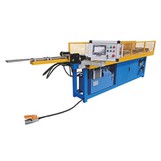
For example, if you're using a Semi-auto Hairpin Bender to bend a metal tube in a cold environment, say below freezing point, the tube might not bend smoothly. Instead of curving gracefully, it could snap or develop small cracks on the outer surface of the bend. This not only ruins the tube but also wastes time and resources.
The low - temperature brittleness is especially a concern for materials like stainless steel and some alloys. These materials have a relatively low ductility at low temperatures, which means they can't be deformed easily without breaking. So, when working in cold conditions, it's often necessary to pre - heat the tube to a suitable temperature to increase its ductility.


High - Temperature Effects
On the other hand, high temperatures can also cause problems. When a tube is heated to a very high temperature, its strength decreases. The material becomes softer and more malleable, which might seem like a good thing for bending. However, if the temperature is too high, the tube can lose its shape stability.
For instance, if you're using a Semi-automatic Full Servo Hairpin Type Long U Pipe Bender and the tube is over - heated, it can sag or deform in an uncontrolled way during the bending process. This leads to inaccurate bends and a poor - quality finished product.
Another issue with high temperatures is the potential for oxidation. When a metal tube is heated in the presence of oxygen, it can form an oxide layer on its surface. This oxide layer can affect the appearance and corrosion resistance of the tube. In some cases, it can also make the tube harder to work with, as the oxide layer might flake off during bending and cause scratches on the tube or the bender itself.
Optimal Temperature Range
So, what's the sweet spot? Well, it depends on the type of tube material. For most common metals like aluminum and mild steel, the optimal temperature for bending is usually in the range of 200 - 400 degrees Celsius. At these temperatures, the tube has enough ductility to be bent smoothly without cracking, while still maintaining its shape and strength.
For more complex materials like titanium or high - strength alloys, the optimal temperature range might be different. These materials often require more precise temperature control, and sometimes, they need to be bent at higher temperatures to achieve the desired results.
As a tube bender supplier, we always recommend that our customers understand the optimal temperature range for the specific tube material they're working with. We also offer guidance on how to heat the tubes properly to ensure a successful bending process.
Temperature Control in Tube Bending
Controlling the temperature during the tube bending process is crucial. There are several ways to do this. One common method is to use a pre - heating system. This can be a simple torch for small - scale operations or a more sophisticated induction heating system for larger - scale production.
Induction heating is a popular choice because it's fast, efficient, and can be precisely controlled. It works by using an electromagnetic field to heat the tube directly, which means you can heat only the part of the tube that needs to be bent. This reduces energy consumption and minimizes the risk of over - heating other parts of the tube.
Another important aspect of temperature control is monitoring. You need to constantly check the temperature of the tube during the bending process to make sure it stays within the optimal range. This can be done using temperature sensors, which can provide real - time feedback on the tube's temperature.
Impact on Different Tube Benders
Different types of tube benders can be affected by temperature in different ways. For example, an Auto Hairpin Bender is designed for high - volume production. In this case, temperature control is even more critical because any issues caused by incorrect temperature can lead to a large number of defective products.
On the other hand, a semi - automatic bender might be more forgiving, but it still requires proper temperature management to ensure consistent results. The key is to understand the capabilities and limitations of your specific tube bender and adjust the temperature accordingly.
Conclusion
In conclusion, temperature has a significant impact on the tube bending process. Whether it's low - temperature brittleness or high - temperature softening and oxidation, getting the temperature right is essential for producing high - quality bent tubes.
As a tube bender supplier, we're here to help you navigate these challenges. We can provide you with the right tube bender for your needs, as well as offer advice on temperature control and other aspects of the tube bending process.
If you're interested in learning more about our tube benders or have any questions about the tube bending process, don't hesitate to reach out. We're always happy to have a chat and discuss how we can help you achieve the best results. Let's work together to make your tube bending projects a success!
References
- "Tube Bending Handbook" by John Doe
- "Materials Science for Tube Bending" by Jane Smith
- Industry reports on tube bending technology and temperature effects