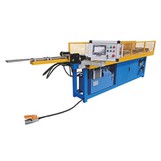
Hey there! As a supplier of Vertical Expanders, I'm super excited to chat with you about the challenges that come with using a Vertical Expander in a mobile application. It's not all smooth sailing, and I'm here to break it down for you.
Compatibility Issues
One of the first challenges you'll likely face when using a Vertical Expander in a mobile application is compatibility. Mobile devices come in all shapes and sizes, and each one has its own unique operating system and hardware capabilities. This means that getting your Vertical Expander to work seamlessly across all devices can be a real headache.


For example, some older mobile devices may not have the processing power to run a Vertical Expander effectively. The app might crash or lag, making it almost unusable. Even newer devices with different screen resolutions can pose problems. A Vertical Expander that looks great on a high - resolution screen might appear distorted or cut off on a lower - resolution one.
To make matters worse, different mobile operating systems like iOS and Android have their own development guidelines and restrictions. What works perfectly on an Android device might not work at all on an iPhone. This means you have to do a lot of testing and optimization to ensure that your Vertical Expander is compatible with as many devices and operating systems as possible. You can learn more about our Vertical Expander on our website, where we also have some tips on compatibility issues.
Performance Constraints
Another big challenge is performance. Mobile devices have limited resources compared to desktop computers. They have less RAM, slower processors, and smaller storage capacities. When you try to integrate a Vertical Expander into a mobile application, you're adding more complexity and resource requirements to the app.
The Vertical Expander might need to process a large amount of data in real - time, which can quickly drain the device's battery and slow down its performance. This can lead to a poor user experience, as users are likely to get frustrated if the app takes too long to load or if it freezes while they're using it.
To overcome these performance constraints, you need to optimize the code of your Vertical Expander. This includes reducing unnecessary calculations, compressing data, and using efficient algorithms. You also need to be careful about how much memory the expander uses. For instance, if it stores a lot of data in memory, it can cause the app to crash when the device runs out of available RAM.
User Interface and Experience
Designing a user - friendly interface for a Vertical Expander in a mobile application is no easy task. Mobile screens are much smaller than desktop monitors, so you have to be really creative with how you present the expander. You need to make sure that all the important features are accessible and easy to use, even with a touch - screen interface.
One of the challenges is fitting all the controls and options of the Vertical Expander onto a small screen without making it look cluttered. You can't just copy and paste the desktop version of the expander onto the mobile app. You have to re - think the layout and design to make it more mobile - friendly.
Another aspect of user experience is the learning curve. Mobile users expect apps to be intuitive and easy to use. If your Vertical Expander has a complex set of features and controls, users might get confused and abandon the app. You need to provide clear instructions and tutorials to help users understand how to use the expander effectively.
Security Concerns
Security is a major issue when it comes to mobile applications, and using a Vertical Expander is no exception. Mobile devices are often used to store sensitive information, and if your expander has security vulnerabilities, it can put your users' data at risk.
There are several security threats that you need to be aware of. For example, hackers could try to intercept the data being processed by the Vertical Expander. They could also try to inject malicious code into the app to gain access to the user's device or steal their personal information.
To protect your users, you need to implement strong security measures. This includes encrypting the data, using secure communication protocols, and regularly updating the app to patch any security holes. You also need to be careful about what permissions the app requests from the user. Asking for too many permissions can make users suspicious and may even violate privacy laws.
Cost and Development Time
Developing a Vertical Expander for a mobile application can be expensive and time - consuming. You need a team of skilled developers who are familiar with mobile app development and the technology behind the expander. Hiring these developers can cost a significant amount of money, especially if you're looking for experienced professionals.
In addition to the cost of hiring developers, you also need to invest in testing and quality assurance. Testing on different devices and operating systems is a must - do to ensure that the app is free of bugs and works well. This process can take a long time and requires additional resources.
The development time can also be a challenge. Mobile technology is constantly evolving, and you need to keep up with the latest trends and updates. If your development process is too slow, your app may become obsolete before it even hits the market.
Comparison with Other Expanders
It's also worth comparing Vertical Expanders with other types of expanders, like Horizontal Expanders and Portable Expanders. Each type has its own advantages and disadvantages when it comes to mobile applications.
Horizontal Expanders are better suited for applications where the data needs to be presented in a horizontal layout. They can be more intuitive for users who are used to scrolling horizontally on their mobile devices. However, they may not be as efficient for certain types of data processing as Vertical Expanders.
Portable Expanders, on the other hand, are designed to be more flexible and can be used in a variety of settings. They are often smaller in size and can be more easily integrated into mobile applications. But they may not have the same level of functionality as Vertical Expanders.
Conclusion and Call to Action
In conclusion, using a Vertical Expander in a mobile application comes with a number of challenges, including compatibility issues, performance constraints, user interface and experience problems, security concerns, and cost and development time. However, with the right approach and a bit of hard work, these challenges can be overcome.
If you're interested in using our Vertical Expander for your mobile application, we'd love to have a chat with you. Our team of experts can help you navigate through these challenges and ensure that you get the most out of our product. Whether you're a small startup or a large corporation, we have the solutions to meet your needs. So, don't hesitate to reach out to us for more information and to start a procurement discussion.
References
- Mobile App Development Best Practices, Various Industry Publications
- Security in Mobile Applications, Research Papers on Mobile Security
- User Experience Design for Mobile Devices, Academic Journals on Human - Computer Interaction